
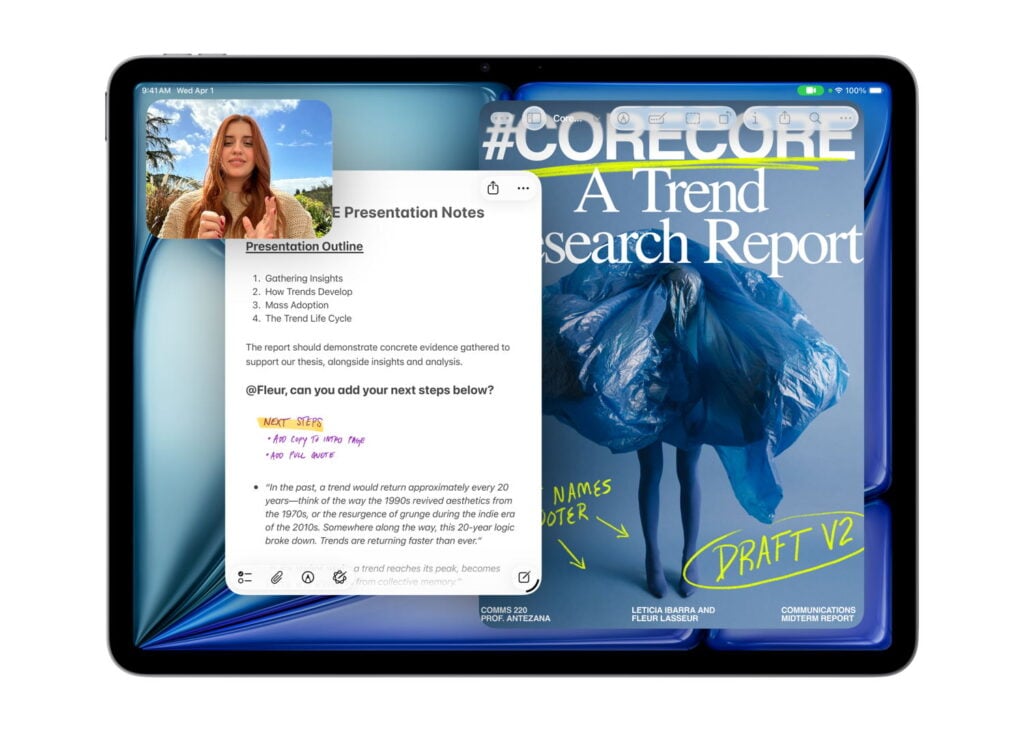
Apple announced two new products yesterday. The iPad Air (M4) is a great product for most lawyers, so that’s the focus of this post. At the end of this post, I discuss the new iPhone 17e.
iPad Air (M4)
For many years, Apple has sold three main iPad models. The high-end model is the iPad Pro, and it has all of the bells and whistles. The entry-level model is the iPad, and while it is just a basic model, that is more than enough for many folks, such as younger students. The iPad Air fits right in the middle. There is a fourth model as well, the iPad mini, but for the reasons I noted in this post, I don’t recommend the iPad mini for attorneys. Nor do I recommend the entry-level model, which is just called “iPad,” because of its compromises. Fortunately, for most attorneys and other professionals looking to get real work done with an iPad, there have been two good choices: the iPad Air and the iPad Pro. Since 2000, when Apple introduced many of the iPad Pro’s key features on the iPad Air, the iPad Air has been the sweet spot for most attorneys. However, if you want a premium product, you can spend another $400 for the iPad Pro with the same capacity.
Yesterday, Apple introduced the latest version of the iPad Air. Instead of 2025’s iPad Air (M3), now Apple is selling the iPad Air (M4) for the same price. It has all of the advantages of last year’s model, plus it is a little faster.
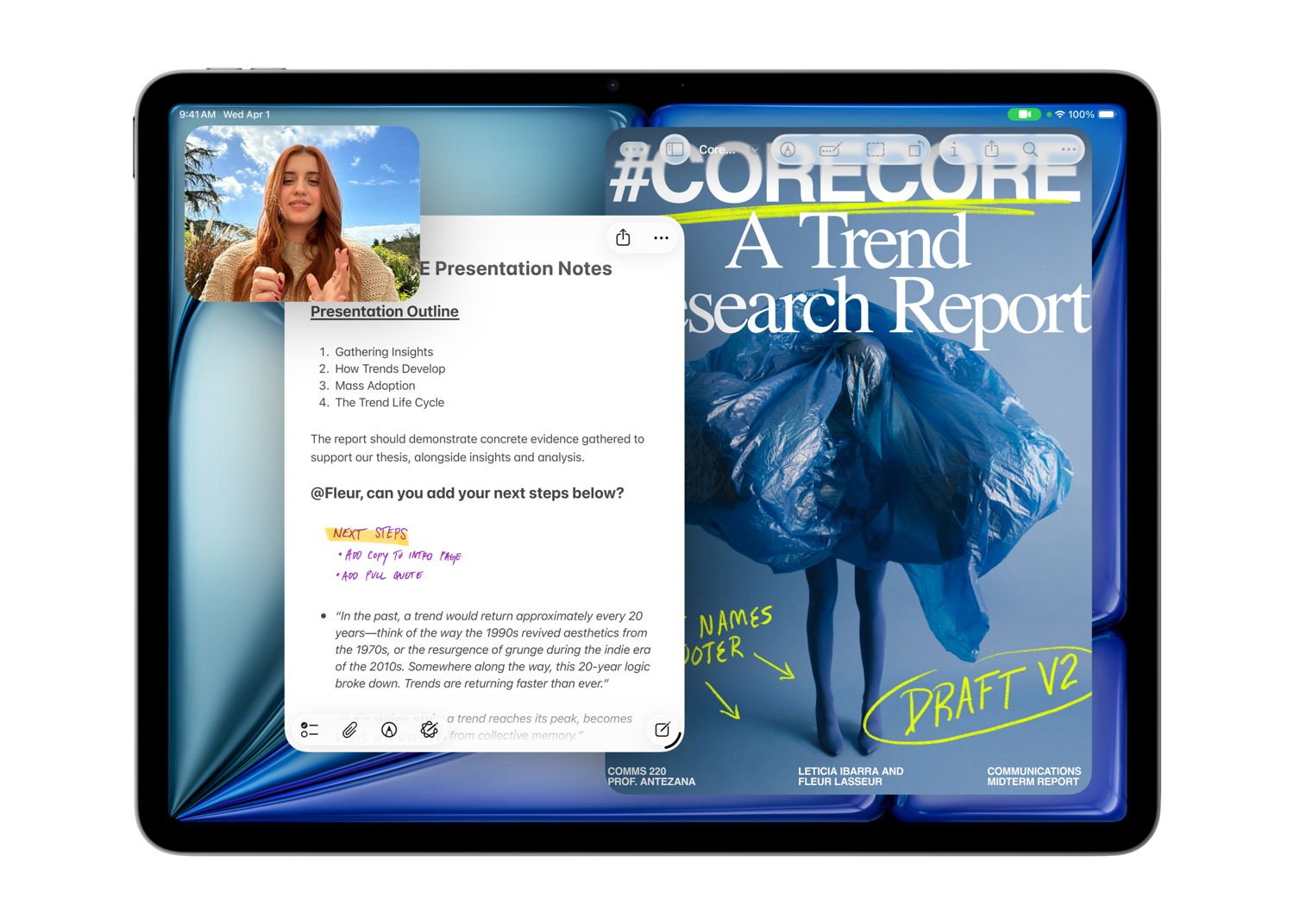
Apple says this year’s iPad Air is 30% faster than last year’s model. There are two reasons for that improvement. The first reason is in the name: the iPad Air (M4) uses the M4 processor, which is better than the M3 processor in the iPad Air (M3). The second reason is that the iPad Air (M4) comes with 12GB of RAM, a significant improvement over the 8GB in the iPad Air (M3).
There are two other changes from last year’s model, though I suspect many folks will not notice them. First, this year’s model includes Apple’s N1 wireless chip, which means it supports Wi-Fi 7 and Bluetooth 6. Of course, those two protocols are very new; you might not currently use either of them, but this support does help to future-proof this latest version of the iPad Air. Second, if you get the cellular version of the iPad Air (M4), it uses Apple’s C1X modem chip, which could, in some circumstances, help performance and extend battery life.
A faster iPad is a more responsive one, making it easier and more enjoyable to get work done. But the real story here is that you get everything that has made the iPad Air great over the last few years, plus some additional performance. You get thin bezels, flat sides, USB-C, a very nice screen, support for the Apple Pencil Pro, and an option to choose between 11" and 13"—the size I prefer for reading briefs, working exhibits, viewing websites, etc. These are all features that used to require paying more for an iPad Pro, so it is great to see them all in the less expensive iPad Air.
The other reason the additional memory and processor speed are nice is that, at some point soon, I hope Apple will do even more with AI. On-device AI has real advantages over cloud-computed AI, especially given the privacy concerns important to lawyers. On-device AI is much better with more memory and faster processors, so this year’s iPad Air is better equipped for AI than last year’s.
The iPad Air continues to start at $599 for the 11" model and $799 for the 13" model with 128GB of storage. If you don’t plan to store a lot of documents on your iPad (for example, if you will keep most of your work documents in the cloud), that might be enough storage for you. A safer bet is to spend an extra $100 for the 256GB version, which is another good way to future-proof your purchase.
The 256GB versions of the iPad Air are $400 cheaper than the 256GB versions of the iPad Pro. What do you lose by saving $400? The iPad Pro has a nicer and brighter OLED screen, Face ID instead of Touch ID, four built-in speakers instead of two, and the speed of an M4 processor in the iPad Air versus an M5 processor in an iPad Pro. There is a version of Apple’s fantastic Magic Keyboard for the iPad Pro and the iPad Air; however, as I explained last week, the version for the iPad Air is cheaper but not quite as good: the trackpad is smaller and lacks haptic feedback, the keyboard is not backlit, and it doesn’t have the aluminium metal finish that feels a little more premium. Finally, there are a few other minor differences that most lawyers are unlikely to care about. For example, the iPad Pro supports a faster USB-C connector (with Thunderbolt / USB 4) and the cameras are better on the iPad Pro (but note that I virtually never use the camera on my iPad Pro).
My iPad is a key part of my law practice. I use it every day for many hours, and for me, the $400 price is easily worth the iPad Pro’s premium features. On the other hand, I didn’t spend extra money on a premium car; my Honda Accord does everything I need. If you are looking to get a new iPad, you just need to decide whether you want a great iPad (the iPad Air) or an even better iPad (the iPad Pro). Thats the same choice that lawyers have faced for the last few years. It is nice to have two choices when both of them are great options.
iPhone 17e
Last Fall, Apple introduced the iPhone 17 line, including the iPhone 17 Pro and iPhone 17 Pro Max and the iPhone 17 (along with the brand new iPhone Air). Apple introduces new iPhones every Fall, but the Fall 2025 introduction was particularly strong.
Yesterday, Apple did the same thing it did this time last year: it introduced a budget version of the iPhone, calling it the “e” model. Of course, a budget iPhone is nothing new; even before last year’s iPhone 16e, Apple sold less expensive “SE” models of the iPhone, dating back to the original iPhone SE introduced in 2016.
If the starting price of $799 for the iPhone 17 seems too high, you can now pay $200 less for the iPhone 17e. That is the same starting price as the iPhone 16e, but the iPhone 17e starts with 256GB of storage (up from 128GB on the $799 version of last year’s iPhone 16e).
By paying $200 less for the iPhone 17e than the iPhone 17, you lose some features. The screen is a little less bright (800 nits versus 1000 nits—and up to 3000 nits when you are outside with an iPhone 17), a little smaller (6.1" versus 6.3"), and not as nice (lacking ProMotion, the always-on display, and the Dynamic Island). There is also no Camera Control button on the side, although it does have an Action button, which you could assign to launch the Camera app. The 17e has a front-facing camera, but it lacks the very useful feature of the other iPhones introduced last Fall: the ability to take a selfie photo in either portrait or landscape mode without having to rotate the iPhone in your hand. And like the iPhone Air, the back of the iPhone 17e has only a single camera, so you don’t get the Ultra Wide camera of the iPhone 17 (or the telephoto camera that is unique to the iPhone 17 Pro).
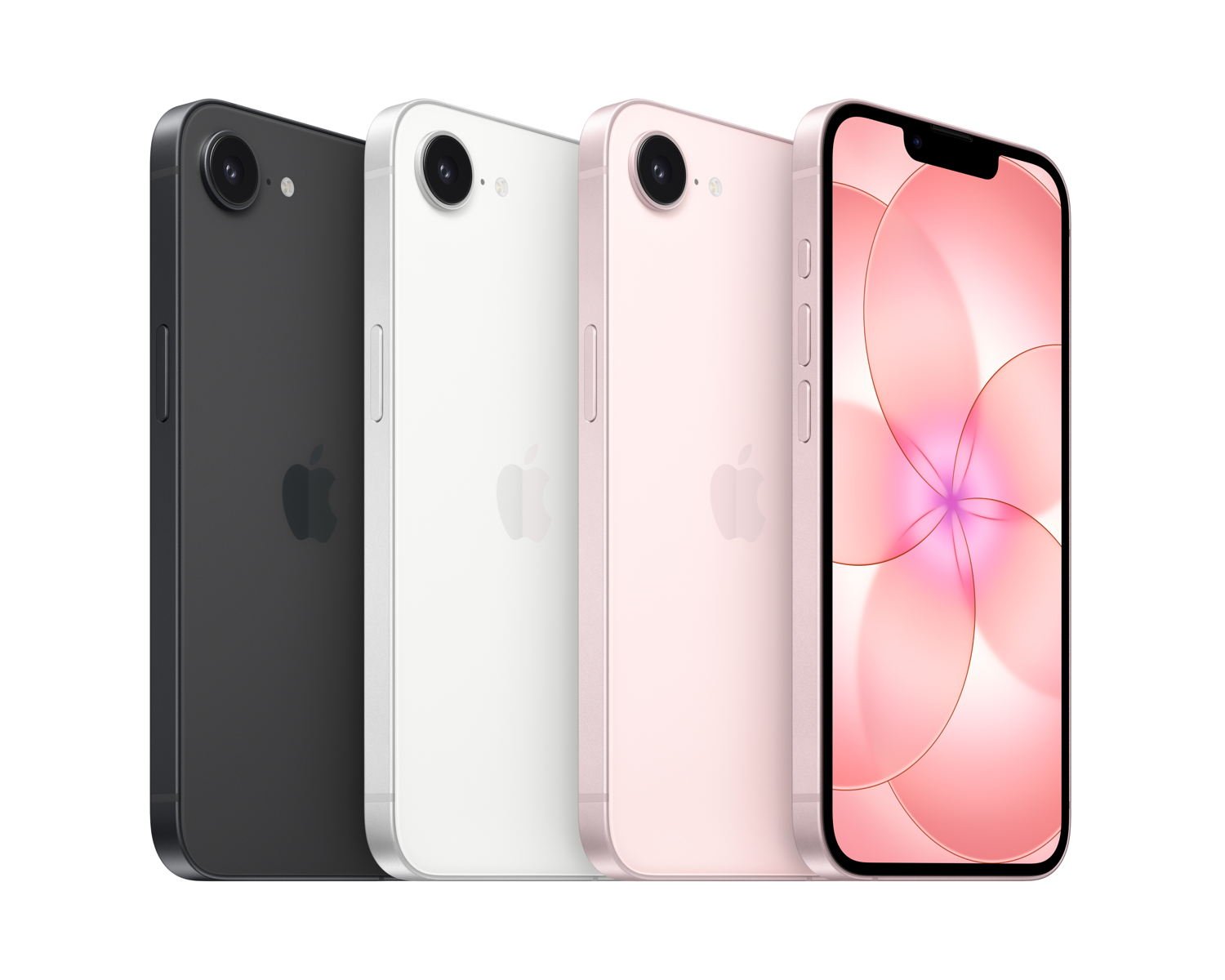
Unlike the iPhone 16e, the iPhone 17e supports MagSafe (with Qi2 speed). MagSafe was a big omission in the iPhone 16e, and I’m glad to see it in the iPhone 17e MagSafe because it lets you use StandBy mode, which is really useful for the reasons I noted in this post. The screen on the iPhone 17e is slightly more scratch-resistant than the iPhone 16e’s. And unlike the iPhone 16e, which came only in black or white, the iPhone 17e now offers a third case color option: Soft Pink.
Note that the iPhone 17e has a smaller screen than the iPhone 17 because it is the same width but a little shorter: 5.78" versus 5.89".
If an always-on display on an iPhone isn’t important to you and a basic iPhone screen with a single camera seems sufficient, the iPhone 17e is an excellent purchase. It is a modern iPhone using the same A19 processor as the iPhone 17. A few months ago, my wife upgraded from an iPhone SE to the iPhone 17, and when I mentioned last night that Apple is now selling an iPhone 17e, her first reaction was that the iPhone 17e would have probably been a sufficient option for her. I suspect that many will agree, so I’m glad that Apple replaced the iPhone 16e with the iPhone 17e instead of continuing to sell the iPhone 16e for another year—something that Apple used to do with its iPhone SE models, which Apple would continue to sell even when they were starting to get a long in the tooth.
Conclusion
The iPad Air (M4) is an excellent model for most attorneys. It can do a lot, and it occupies that “just right” middle spot in the lineup. The iPhone 17e is a budget iPhone, but thanks to the A19 processor, MagSafe support, and other modern features, it is a solid choice for many people. Both the iPad Air (M4) and iPhone 17e can be ordered starting Wednesday, and they ship a week later on March 11.